Children attending preschool have numerous learning objectives. Caregivers will monitor a child to determine their emotional, physical, and social growth. Additionally, as a child grows, learning objectives may change as emotions and personalities develop.
A top-notch preschool curriculum can provide your child with a structured environment where they can interact with others while learning vital skills. Children who learn these skills can apply them to situations as they continue to grow.
Preschool Programs
For those seeking a preschool program for their child, consider the many attributes a program can exhibit. For instance, many preschool programs provide potty training, a welcoming atmosphere, experienced educators, hands-on learning experiences, large play areas, age-appropriate curriculum, and safe facilities.
Children learn valuable skills in preschool that they can apply to life outside of the classroom. Find a preschool program that meets your needs and marks your child’s milestones in learning and development.
The Stages of Learning
According to the National Institutes of Health, monitoring children’s milestones can establish attachment and the skills that follow. At each stage of development, children learn more and more about the world around them.
The following is a breakdown of distinct milestones associated with a child’s age:
- 1 to 2 months of age: During this time, a child may smile, recognize voices, and recognize smells.
- 2 to 3 months of age: As they age, infants progressively know how to calm themselves, respond to gentle calming, and give a responsive smile. Infants of this age need smooth routines and learn to regulate physiologically.
- 4 to 5 months of age: Vocalization begins during this stage. Infants learn to manage tension through sensitive, cooperative interaction with caretakers.
- 6 to 12 months of age: Effective relationships are established between the infant and caregiver. Infants may show anxiety around strangers, seek comfort from the caretaker, and begin to follow the caretaker’s gaze. Additionally, they may show distress upon separation.
- 12 to 18 months of age: During this time, infants begin to explore their environment by pointing at or grabbing an object. Children may begin to use gestures for hello and goodbye. The child may also imitate their environment.
- 18 to 30 months of age: Children gain autonomy during this timeframe and learn to pretend-play. The child’s temperament manifests more, which can lead to cooperation, friendliness, anger, or aggressiveness.
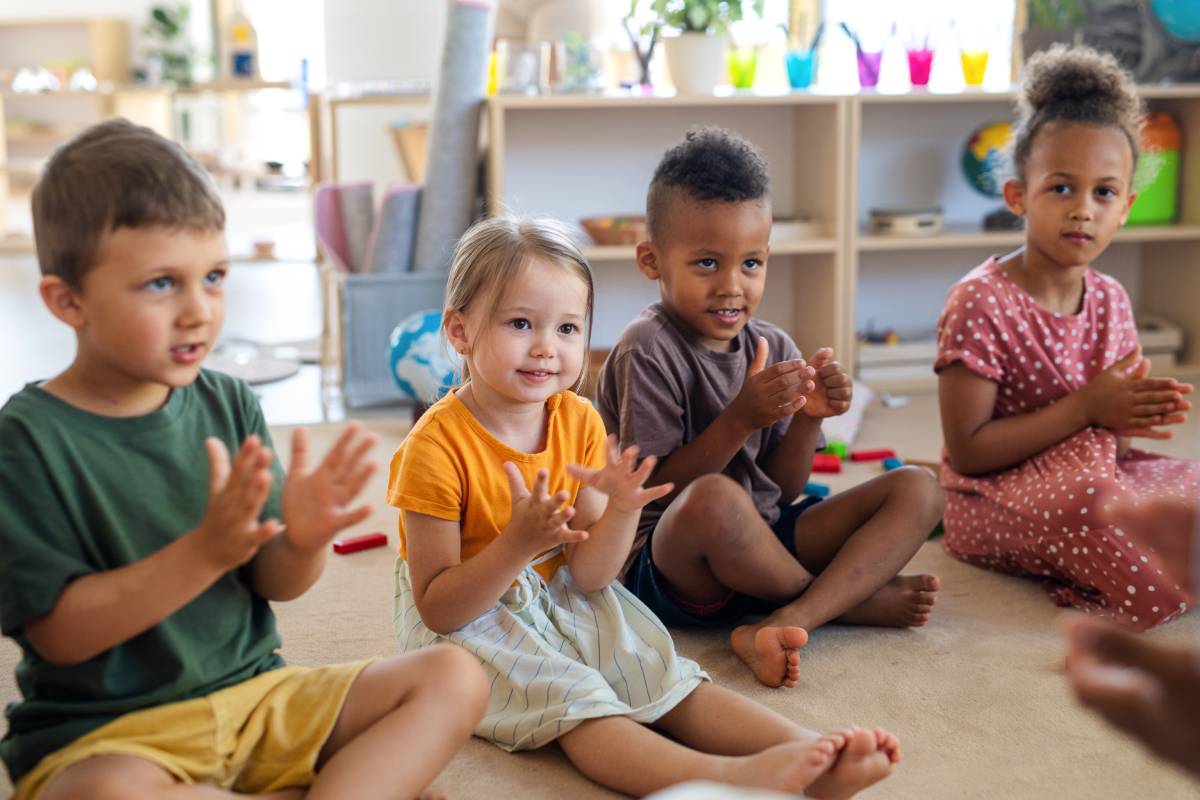
- 30 to 54 months of age: During this time, gender roles, peer relationship issues, and impulse control emerge. The child participates in interactive play, learning how to cooperate, share skills, and control emotions.
As a child grows up, they learn countless skills that can benefit them for the rest of their lives.
Supporting Healthy Social-Emotional Growth
Preschool is an important time for children to learn how to communicate, build friendships, express emotions, and develop confidence in group settings. Every child develops at their own pace, and it is normal for young children to experience occasional challenges while adjusting to new environments and routines.
Parents and teachers can support healthy social-emotional development by encouraging positive interactions, creating consistent routines, and helping children express their feelings in a safe and supportive way. Activities such as cooperative play, storytelling, group learning, and guided problem-solving can all help strengthen emotional awareness and social skills.
In some cases, children may benefit from additional support if they struggle with communication, emotional regulation, or social interaction. Early guidance and encouragement can help children build confidence and develop the tools they need to thrive both inside and outside the classroom.
Find a Preschool Program
At Towne & Country Early Education Center, we provide a strong academic focus on early reading skills, critical thinking, math, science, and pre-writing. In addition, our program offers a structured curriculum, hands-on learning, and interactive activities to help young children more easily interact with one another. Our dedicated and professional educators provide a safe environment where kids learn problem-solving skills, build confidence, and gain independence.
Consider our preschool and daycare center. Not only do we encourage curiosity in children, but we also help promote self-expression through music, dramatic play, and creative art. Contact us today to learn more about how Towne & Country Early Education Center can teach your children useful skills.


