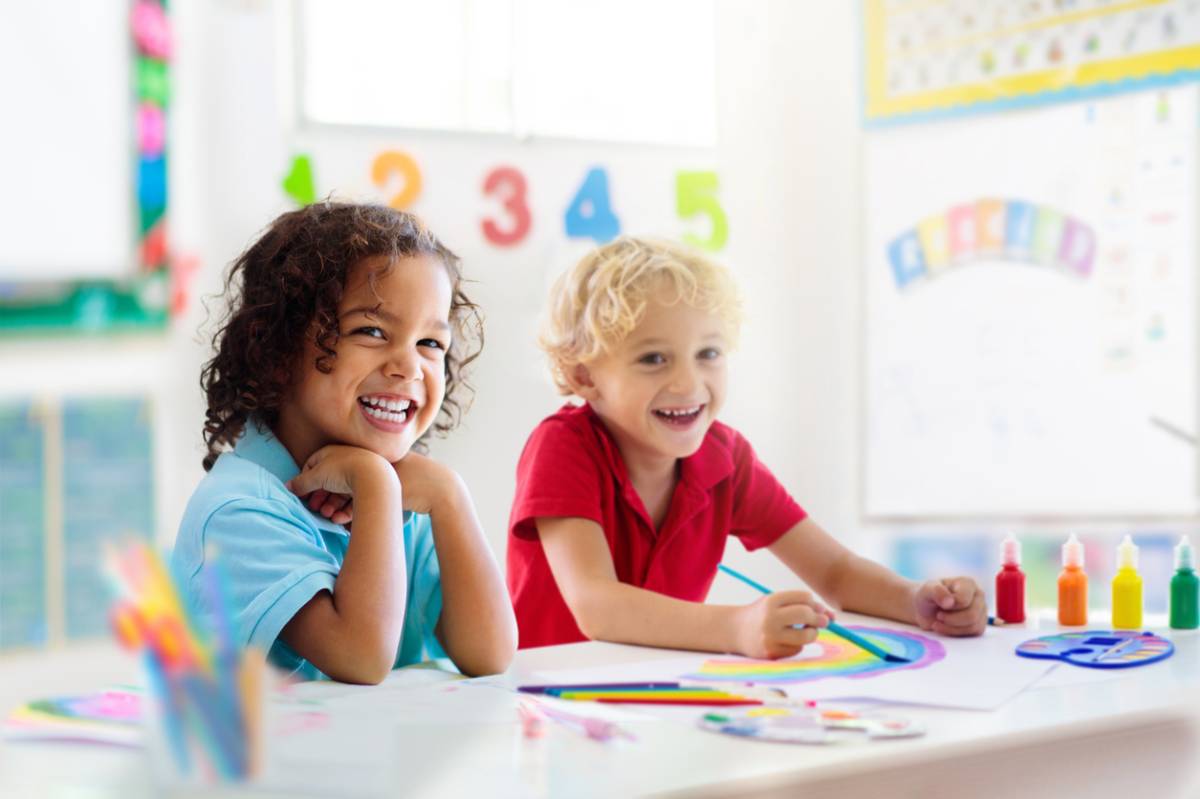
By age five, children have developed rapidly. The changes aren’t only physical; they also affect how they think and interact with others. They may be well on their way to learning their letters and numbers, but other skills are worth encouraging. Social skills are an important part of not just academia but also everyday life. They are learning how to make friends, share, wait their turn, speak up when something is wrong, and manage conflict. At home, these skills may matter less, but in a preschool or daycare center setting, they make a big difference in how children interact with peers and educators. A quality pre-K school program doesn’t expect your child to master a long list of social skills, but you can encourage a few throughout the day to give them a small advantage before they start.
Sharing and Taking Turns
Thinking beyond themselves can be a difficult process for young children. Sharing and turn-taking sound simple in theory, but in practice, they’re often messier than they sound. They are still learning patience, impulse control, and that others’ feelings and wants matter too. This is one of those skills that develops more easily through practice. Putting words to actions can help them better understand what is happening. Sharing doesn’t have to mean forcing your child to hand over anything they have right away. Learning to wait for someone to finish a turn, pass something, and wait for it to come back is much more doable.
Conversation and Listening
Five-year-olds are oftentimes natural talkers, always having something to say. Learning to listen to someone else talk can be the more difficult part. Children begin to understand the back-and-forth rhythm of everyday conversation. They are discovering the connection between what a person is saying and the quality of the conversation rather than just waiting their turn to respond. Daily conversations at home give your child many opportunities to practice these skills. Keep the questions flowing from each side; encouraging open-ended conversations is one of the strongest ways to develop these skills before starting school.
Feelings and Conflict
Feelings and conflict can run high when you get a group of small children together. Conflict among peers can be useful practice when no one rushes in to solve every disagreement. They will not always handle it well; even adults struggle sometimes. But learning to recognize their feelings and how to manage them appropriately is a process. Progress, not perfection, is the goal.
Cooperation
Cooperation is an important skill in any group setting. When working and playing alongside others, you may need to build something together or work together to achieve a common goal. You can help build this skill at home by having siblings work together on something instead of designating separate tasks.
Why Preschool Helps
Home is a great starting point for developing social skills, but preschool puts those skills under entirely different constraints in a new environment. Children are now in a larger group setting with their peers and have to learn how to navigate their day in their new space. Preschool offers many chances to interact socially and put growing skills into practice. Educators support social skill development through curriculum, structure, and environment design, helping your child grow.
Learn how we prioritize social skills in our pre-K program at our preschool and daycare center by giving us a call today.


